
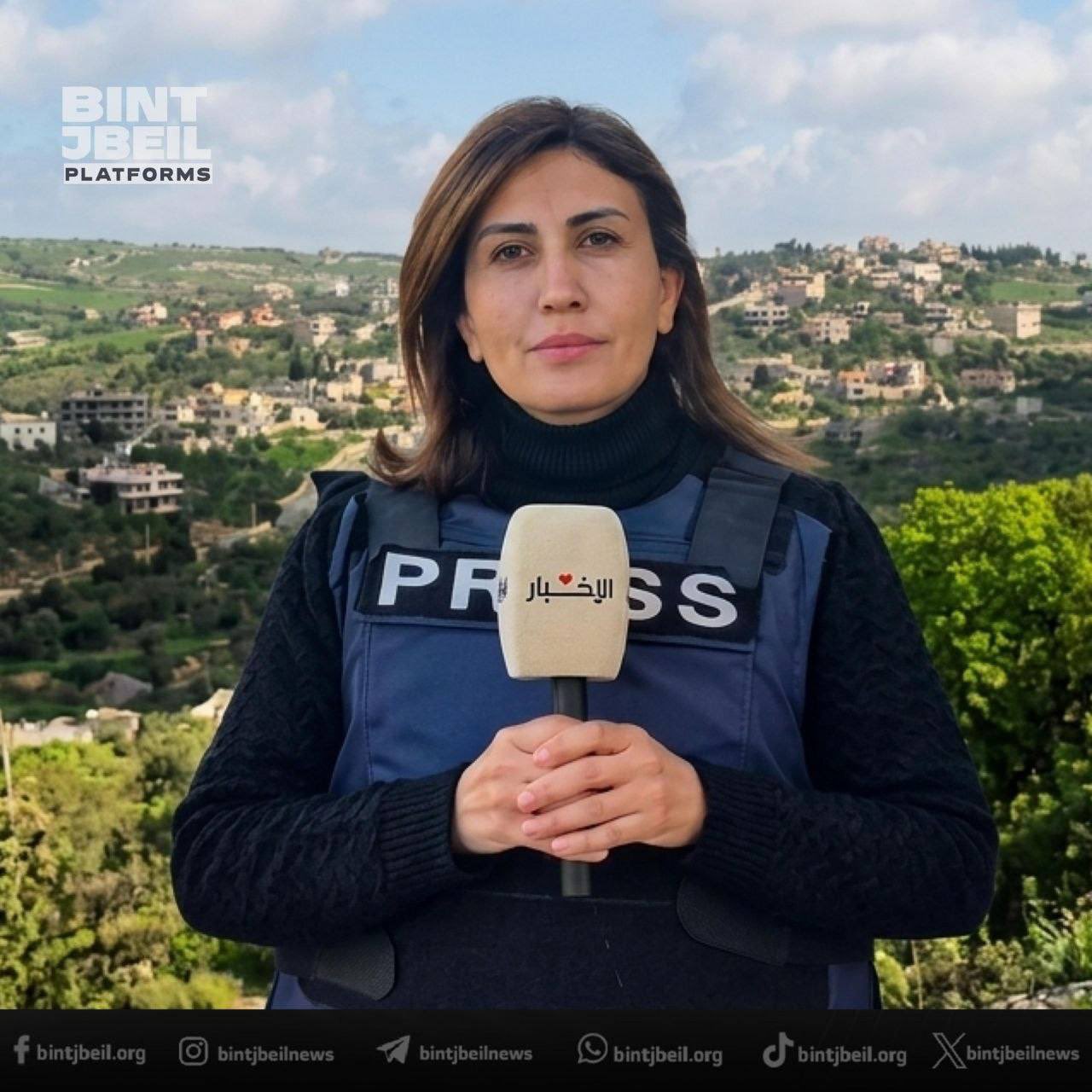
Amal Khalil
أمل خليل
Reporter for the local media Al-Akhbar
Killed by Israel using an Airstrike
Killed by Israel on 22 Apr 2026
Related Archives
Links
- Amal Khalil
- Lebanese journalist Amal Khalil killed in Israeli strike on a house where she took cover, paper says
- Israeli airstrike kills journalist Amal Khalil in south Lebanon: civil defence
- Lebanese journalist killed by Israel received death threats from now-unmasked Israeli journalist
- Alternative Syndicate Gathering condemns Israel's threat to journalist Amal Khalil
- An airstrike trapped a journalist. She died as rescuers waited for permission to save her.
Archivist Notes
Amal Khalil was a Lebanese veteran correspondent for Al-Akhbar and had consistently produced field reports from south Lebanon, both in the war that began on 2 March and the earlier conflict between 2023 and 2024. She spent nearly two decades reporting from southern Lebanon, often from the front lines. Raised in the south, she dedicated her work to telling the stories of civilians living through conflict—documenting loss, displacement, and resilience with a strong local voice.
On April 22, 2026, despite a declared ceasefire, journalist Amal Khalil was killed in a series of Israeli strikes on the town of Tiri in southern Lebanon while she was covering the war front. The initial drone attack targeted vehicles near her, killing two people. Khalil and her colleague Zainab Faraj survived the first strike and sought shelter, but subsequent strikes hit near them and later directly targeted the house where they had taken refuge.
Rescue efforts were repeatedly delayed and disrupted. Ambulance access was blocked after roads were cut, and multiple attempts by the Red Cross to reach the site were hindered by continued strikes and security restrictions. Faraj was eventually rescued, but Khalil remained trapped under rubble as efforts to reach her continued late into the night, involving the Lebanese Army, the Red Cross, UNIFIL, and diplomatic intervention.
Around 23:34, Lebanese Civil Defense teams recovered Amal Khalil’s body. Her death followed hours of unsuccessful rescue attempts under fire, amid international concern and calls from press freedom organizations warning about the obstruction of rescue operations and the apparent targeting of journalists.
The head of the Union of Journalists in Lebanon, Elsy Moufarrej, accused Israeli forces of deliberately targeting Khalil, citing a death threat sent to the journalist in September 2024. She was also the subject of an incitement campaign attributed to the Israeli army: on April 15, 2026, the Israeli Defense Forces’ Arabic-language spokesperson, Avichay Adraee, posted on X a video of Amal Khalil rescuing a cat trapped under rubble in the village of Ansariyeh, southern Lebanon, describing her as “a devil playing the role of a compassionate heart.”
Khalil had also shared with colleagues messages and voice recordings of threats she received on her phone from an individual identifying himself as “Gideon Gal Ben Avraham,” who made unsubstantiated claims that journalists reporting from Lebanon and Palestine were linked to intelligence networks and passing information to groups such as Hamas and Hezbollah, and who directed repeated threats at individuals he described as supporting what he called “terror.”